


Fynbos: The Fine Bush That Made a Nation’s Soul
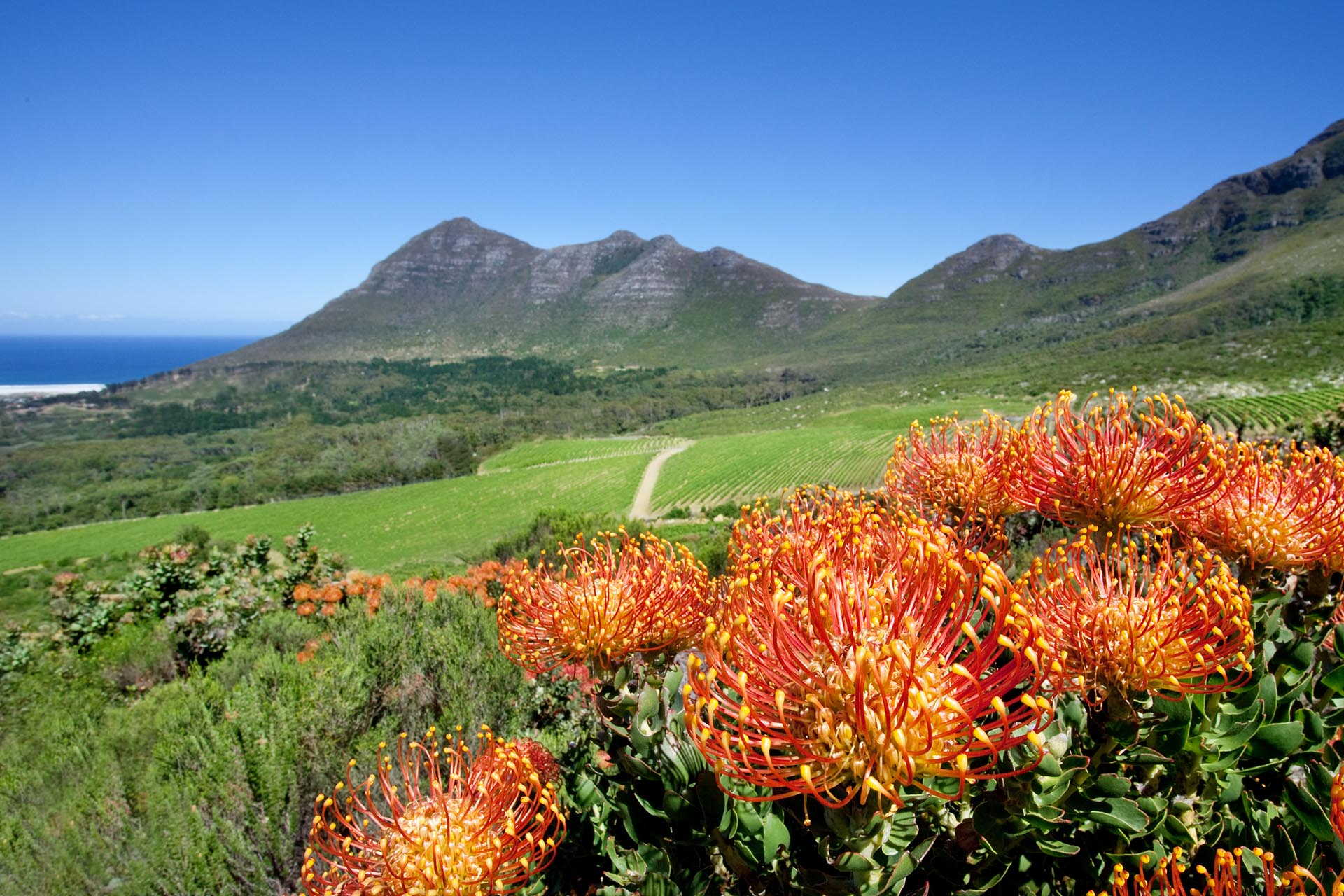
A shrubland the size of a small country’s countryside holds more plant life than most continents. It shaped the Cape’s first peoples, drew the curiosity of Dutch botanists, and now grows between the vines of the Winelands.
eyesonsouthafrica
Drive east out of Cape Town and the land begins to change. The mountains tighten and the air smells of resin and warm stone, and the hillsides are dense with small, tough, silvery-green leaves. This is fynbos (pronounced fain-boss), and few places on Earth can match it for sheer botanical richness.
What Is Fynbos?
Fynbos is a type of vegetation, not a single plant. UNESCO describes it as a fine-leaved, hard-leaved shrubland adapted to both a Mediterranean climate and periodic fires, unique to the Cape Floral Region. Its three signature plant families are the proteas, the heaths (ericas) and the restios, the wiry, reed-like plants that give fynbos its windswept texture.
The numbers are staggering. More than 9,000 plant species occur here, in an area comparable in size to Malawi or Portugal, and roughly two thirds exist nowhere else on earth. The Cape is also unusual among the world’s six floral kingdoms, as the only one contained within a single country. One source puts the diversity of fynbos at two to three times that of the world’s rainforests, measured species per unit of area.
In 2004 the region received UNESCO World Heritage status. The listing notes that it is one of the richest areas for plants in the world, and the Cape Floral Region is counted among the world’s biodiversity hotspots.
Why It Is So Emblematic
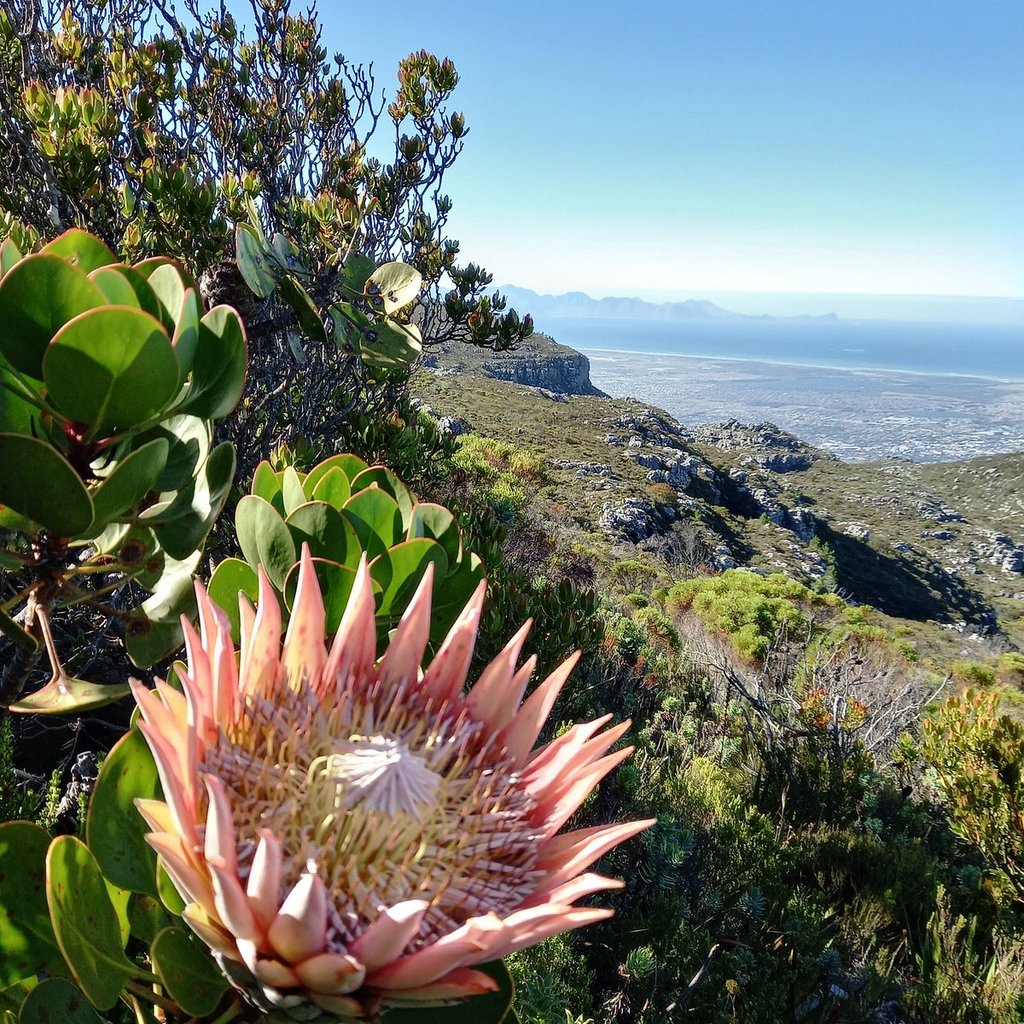
Fynbos is more than a botanical curiosity in South Africa. It is a national symbol. The king protea is the country’s national flower, and the Springbok rugby emblem sits beside a protea on the Proteas, the national cricket team’s crest. The bloom has become a shorthand for resilience.

The symbolism has a basis in biology. Fynbos thrives on poor, sandy, acidic soils, in summer drought, and in the face of regular fires. For many species, fire is a trigger for renewal rather than a catastrophe: seeds open, resprouting begins and the cycle restarts. A plant community built around survival and renewal is a fitting emblem for a young democracy with a hard history.
Fynbos is also ecologically intricate. Its flowers have co-evolved with pollinators ranging from sunbirds and sugarbirds to, in about four percent of species, rodents.
The Name and the Dutch Chapter
The word fynbos is Afrikaans, and its roots are Dutch. It echoes the Dutch for “fine bush,” a reference to the narrow, needle-like leaves of the shrubs. Dutch settlers gave the vegetation a practical name before science described it.
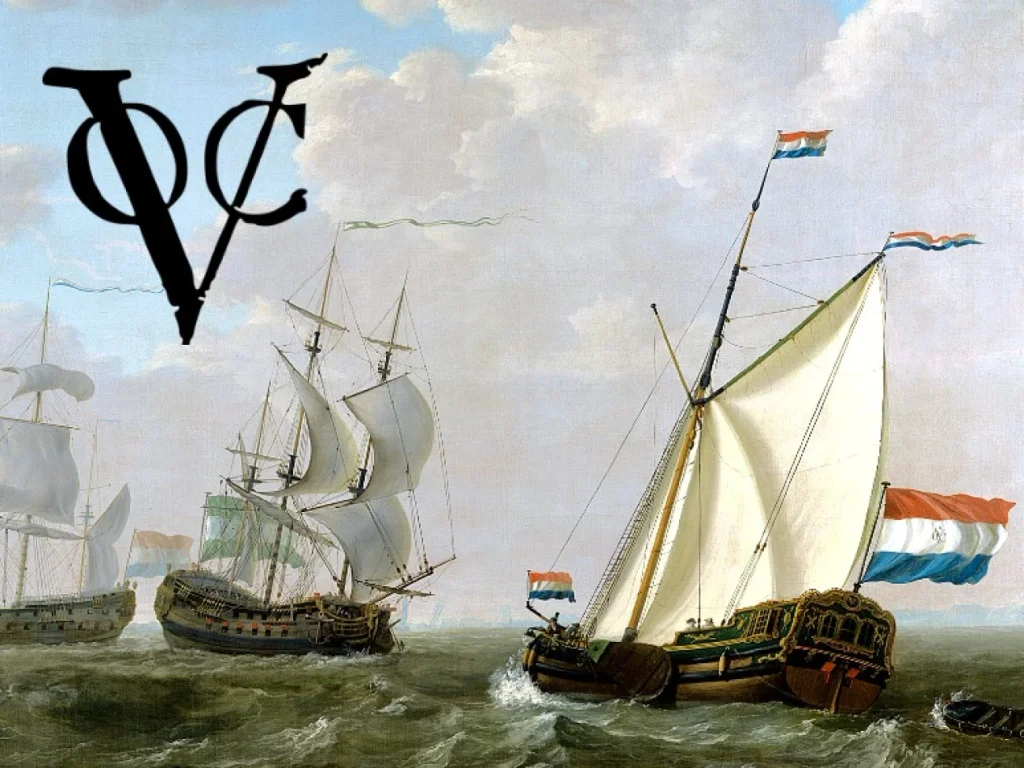
The story began in 1652, when the Dutch East India Company (VOC) established a refreshment station at the Cape under Jan van Riebeeck. The Company’s Garden in Cape Town was planted to supply passing ships with fresh produce, and it became a landing point for plant knowledge. Dutch and, later, other European botanists and collectors found a flora unlike anything in Europe. Specimens and seeds went to botanical gardens across the continent, and Cape plants shaped the early study of southern African botany.
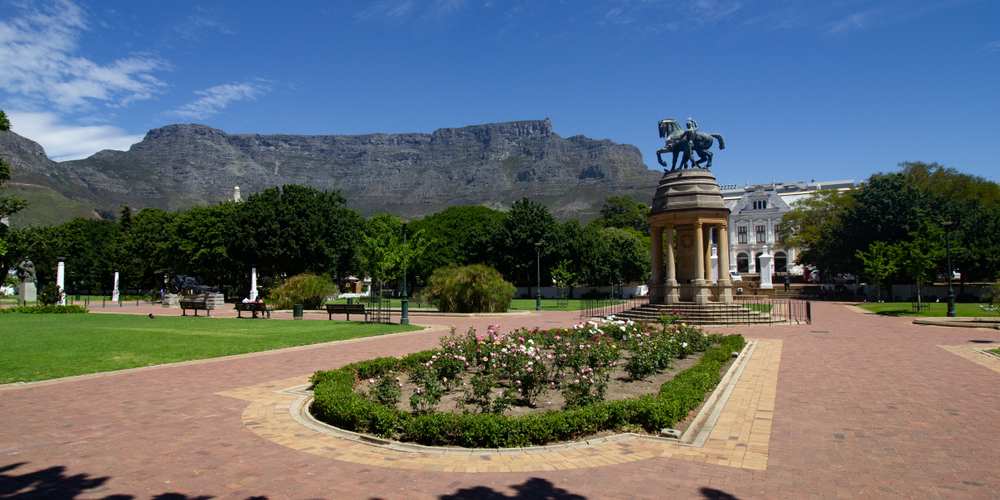
The settlers’ relationship with the land was complicated. Fynbos was the vegetation of an already inhabited landscape. The Khoekhoe and San peoples had long used it for food, medicine and tea. Rooibos and buchu are among the best-known examples, and honeybush is another. Many of the plants and the traditions that surround them remain central to South African life today. Any account of fynbos has to honour this Indigenous knowledge alongside the Dutch botanical record.

Fynbos Meets the Winelands
The same mountains, soils and climate that produce fynbos also make some of the world’s most celebrated wine country. Simon van der Stel, governor of the Cape from 1679, helped establish viticulture around Stellenbosch, which still carries his name. French Huguenot refugees arrived in the late 1680s and settled in the valley now known as Franschhoek, adding expertise to the Cape’s vineyards.
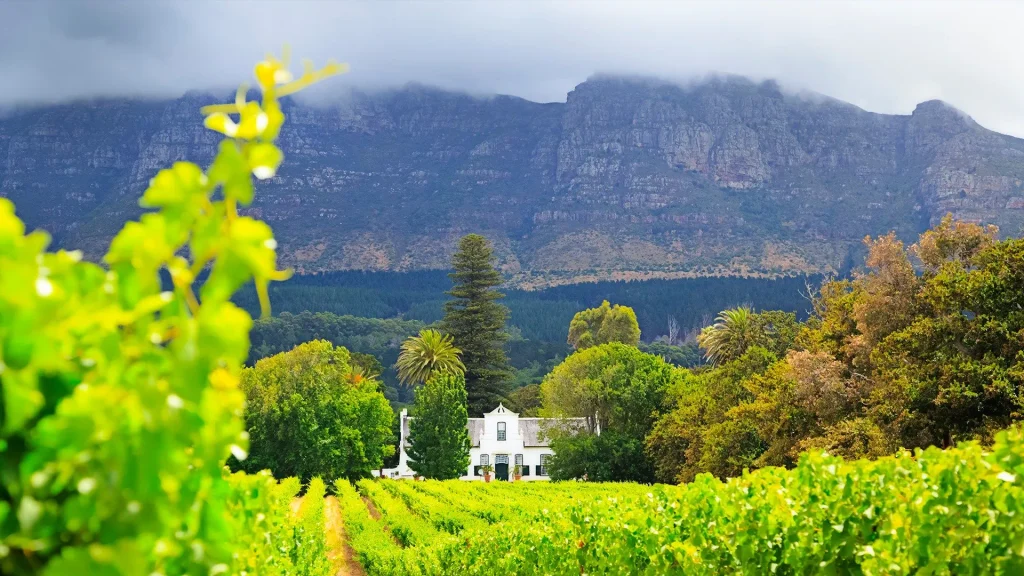
The relationship between vines and fynbos is now increasingly a conservation partnership. Many wine farms sit beside, or on, some of the most threatened vegetation in the country. Farmers have increasingly protected their remnant patches rather than ploughing them, a response to the fact that more than 1,700 fynbos species are vulnerable, endangered or critically endangered because of urbanisation and development. Across the Winelands, initiatives encourage estates to set aside natural land and tell the story on the label. In the Elgin Valley, the Green Mountain Eco Route is promoted as the world’s first biodiversity wine route, which is an appealing idea for any traveller: a glass of wine drunk within sight of the plants that make the place unique.
Is Fynbos Found Only in South Africa?
Yes. True fynbos occurs only in South Africa. The Fynbos Biome is found exclusively in the Cape Floral Kingdom, a belt covering roughly 6.7 percent of the country’s land surface, along the south-western and southern coast. It stretches from the Western Cape into the Eastern Cape, which is why the UNESCO site spans both provinces.
There are a few important nuances:
- Look-alikes exist elsewhere. Five regions of the world have a Mediterranean-type climate: the Mediterranean Basin, coastal California, central Chile, south-western Australia and the Cape. Each has its own shrubland (chaparral, matorral, kwongan, maquis), shaped by similar conditions of dry summers and fire. They look and behave comparably, but they are botanically distinct from fynbos.
- Distant relatives. Proteas belong to the Proteaceae, a family that also includes Australia’s banksias and grevilleas, a legacy of the ancient southern supercontinent Gondwana. Restios and ericas also have kin on other continents.
- Cultivation abroad. Gardeners and flower growers in Australia, Hawaii, Portugal, California and elsewhere cultivate proteas and other Cape plants. This does not make it fynbos. The community of plants, soils, fire and pollinators is what defines it, and that exists only at the Cape.
A Landscape Worth Protecting
Fynbos is both abundant and fragile. Urban growth, agriculture, invasive alien plants and altered fire regimes threaten what remains. The IUCN’s World Heritage outlook flags invasive species as a challenge to the region’s values, even as UNESCO notes that manual control programmes for invasive species have been used as a reference for other parts of the world.
Travellers can help in small ways: stay on marked trails, choose wine farms and lodges that protect their natural land, and buy rooibos or other fynbos products from community-linked producers.
The Last Word
Fynbos is a living archive. In its crowded hillsides you can read the story of a continent’s ancient geography, the knowledge of its first peoples, the curiosity of Dutch and European botanists, and the choices of present-day farmers. Walk through it on a mountain bike, with a guide or with a glass in hand, and you are looking at something that exists nowhere else.