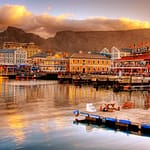



South Africa’s Wind Rush

Powerful Resource, Congested Grid, and a Question for Dutch Capital
eyesonsouthafrica
South Africa has some of the best wind in the world and a grid that struggles to carry it. Both facts matter to anyone deciding whether to put money into South African wind.
A market that has already proven itself
Wind in South Africa is no longer a pilot project. By the end of 2025, South Africa remained Africa’s largest wind market, with more than 4 GW operating, about 2.8 GW under construction and a pipeline above 60 GW. The Integrated Resource Plan envisages 43 GW of new wind by 2042.
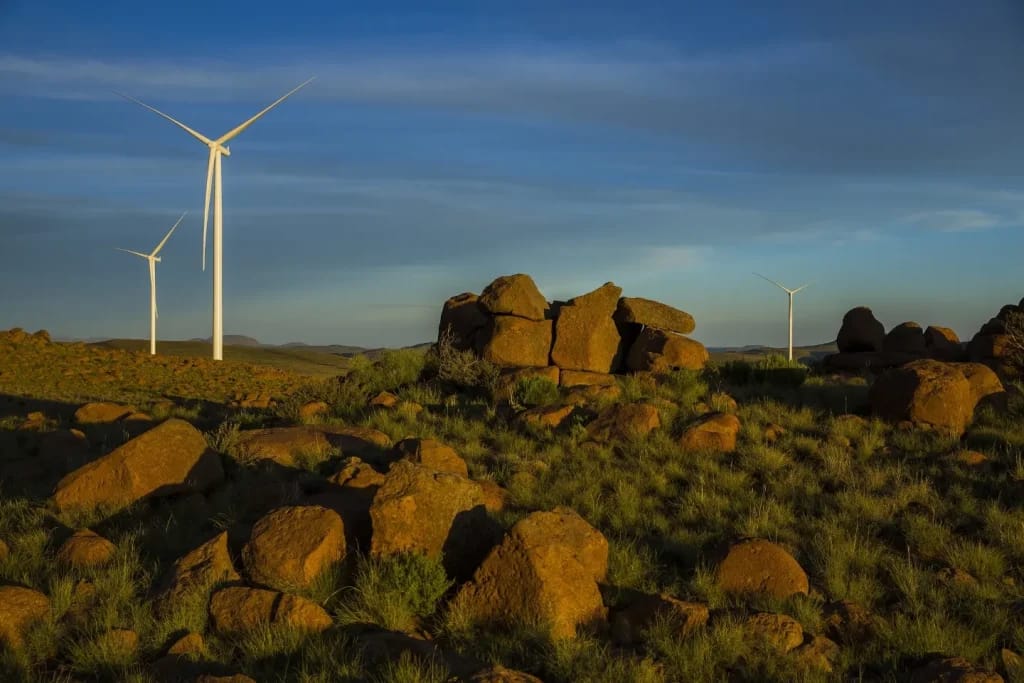
Momentum is building. In the first half of 2026, wind reached commercial operation across seven projects totalling 815 MW, including the Impofu cluster. That cluster is the story of the year. Enel Green Power RSA’s 330 MW Impofu cluster in the Eastern Cape comprises three 110 MW farms. It was built for private customers, not for Eskom. Its power purchase agreements are with Sasol and Air Liquide, and the electricity is wheeled across the grid. The project included a 116 km, 132 kV line, now the largest privately built powerline in South Africa.
The farms already turning
Operating wind is concentrated in the Cape provinces. Among the best-known sites:
- Northern Cape: Khobab and Loeriesfontein 2 together form the country’s largest wind facility, with 122 turbines and roughly 283 MW. Roggeveld and Karusa near Sutherland, Garob near Copperton and Kangnas near Springbok each sit around 135 to 140 MW.
- Eastern Cape: Cookhouse (about 136 MW), Kouga near Humansdorp, and now Impofu. Earlier data showed more than a third of operating wind capacity in the Eastern Cape, between Cookhouse and Humansdorp.
- Western Cape: Gouda (about 135 MW), Perdekraal East near Touwsrivier, Aurora near Vredenburg, and the Sere farm near Vredendal, the only Eskom-owned wind station, at roughly 105 MW.
The bottleneck: the grid
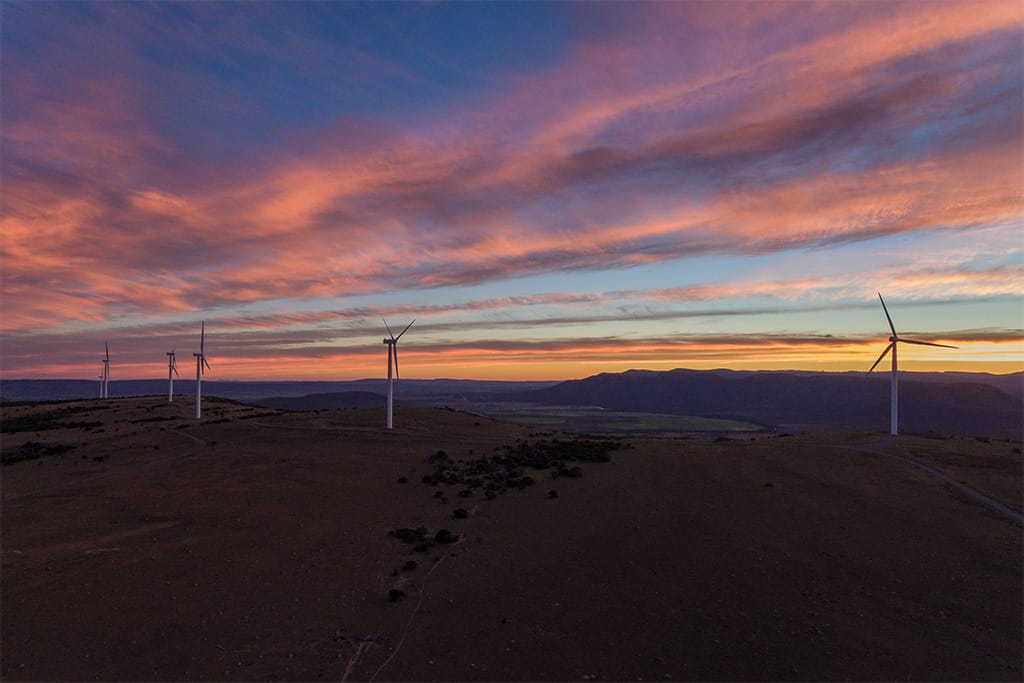
The best wind is where the grid is fullest. None of the wind projects competing for a 3,200 MW allocation advanced to preferred-bidder stage, because Eskom said grid capacity in the Eastern, Northern and Western Cape was fully absorbed. The government then reallocated the wind megawatts in that round, Bid Window 7, to solar.
The fixes are coming, but they are partial:
- Curtailment as a tool. Congestion curtailment as an ancillary service is capped at 4% and limited to the Western and Eastern Cape, unlocking about 1,580 MW (1,180 MW in the Western Cape, 400 MW in the Eastern Cape). That is well short of the 3,470 MW originally floated. The approval runs from 1 April 2025 to 31 March 2028.
- Readiness-based queuing. New grid capacity allocation rules replace an opaque queue with an approach that prioritises projects with real milestones.
- Private money for the grid. The Transmission Development Plan outlines about R440 billion in grid expansion, and the Independent Transmission Projects programme will let private players take part in the build-out.
- New outlets. At Windaba this month, the minister said government is exploring exports of excess wind generation to the SADC region and accelerating 4.6 GW of battery storage.
Where investors should look
- Eastern Cape. It has proven resource, an established supply chain and a corridor where Impofu shows the private-offtake route works. The curtailment allowance is smaller here (about 400 MW).
- Western Cape. It has the largest curtailment-unlocked allocation (about 1,180 MW) and is close to the industrial and port infrastructure around Saldanha and Cape Town.
- Northern Cape. It has superb resource (Loeriesfontein, Sutherland, Springbok) and is the highest-upside, highest-patience play. It sits outside the curtailment relief, so it depends on new transmission lines being built.
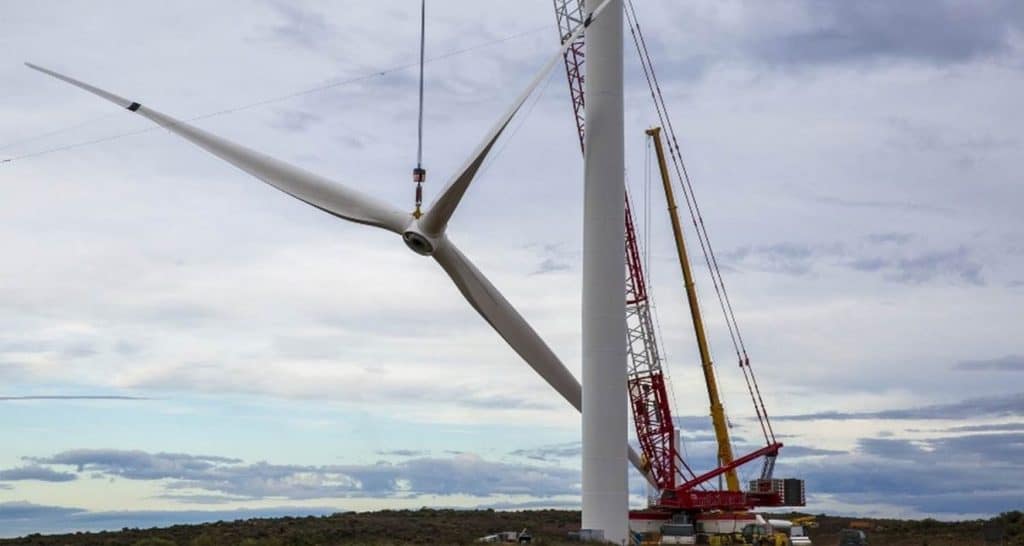
Whichever region you choose, the entry point matters. Corporate wheeling deals with industrial buyers like Sasol move faster than state auctions and avoid the stop-start history of the REIPPPP rounds. Even so, projects still need grid access, which means being “shovel-ready” under the new rules.
Is it a safe bet for Dutch investors?
No, but it can be a sound, calculated one if you structure it carefully.
What works in its favour. The operating track record is real, demand from large industrial buyers is strong, and South Africa has long been among the main Dutch trading partners in Africa. About 350 Dutch firms operate there, employing roughly 10,000 people.
What should give you pause:
- Grid and regulatory risk is the dominant risk. Industry voices say the real problem is confidence in the rules. A JUWI executive argues that agencies must apply rules consistently and avoid last-minute changes. A project can be technically excellent and still stall waiting for a connection.
- Curtailment erodes returns. A cap of 4% to 10% on output must be modelled into your revenue case from day one.
- Treaty protection is thin. The Netherlands-South Africa investment treaty was terminated on 1 May 2014. Whether and how older investments remain covered is a legal question to take to counsel. For new investments, don’t assume a bilateral treaty will back you up. Look instead at contractual protections, political-risk insurance and multilateral or development-finance participation (Dutch development finance institutions and MIGA are worth exploring).
- Currency risk. Revenues in rand and financing in euros require careful hedging or a rand-indexed structure.
A sensible approach: partner with an experienced local developer, favour projects that already hold or are close to grid allocation, prioritise corporate PPAs with creditworthy offtakers, and stage your capital against grid milestones rather than committing it all upfront.
This is a general overview, not financial or legal advice; I’m not a financial adviser or lawyer. Before committing capital, take specialist advice on tax, treaty and structuring questions. Market conditions here move quickly, so verify the latest grid allocations and rules directly with the IPP Office, NERSA and NTCSA.