


Following the Old Trade Roads
Dutch Heritage Along South Africa’s Garden Route
eyesonsouthafrica
East of Cape Town, where the mountains soften into forest and the coastline unfurls into a string of lagoons, lakes, and cliffs, lies one of the most celebrated scenic drives on the planet: the Garden Route. Most travelers come for the views — and they are, by any measure, extraordinary. But threaded through this landscape of ancient forests and dramatic coastline is a quieter story: the story of Dutch farmers, foresters, and frontier officials who pushed east from the Cape centuries ago, leaving behind towns, place names, and traditions that still color the region today.
If the Cape Winelands reveal the elegant, aristocratic face of Cape Dutch heritage, the Garden Route reveals its hardier, more frontier-worn cousin — a story of woodcutters, elephant hunters, missionaries, and settlers carving a foothold into one of the wildest parts of the Dutch colonial frontier.
Swellendam: The Gateway Town
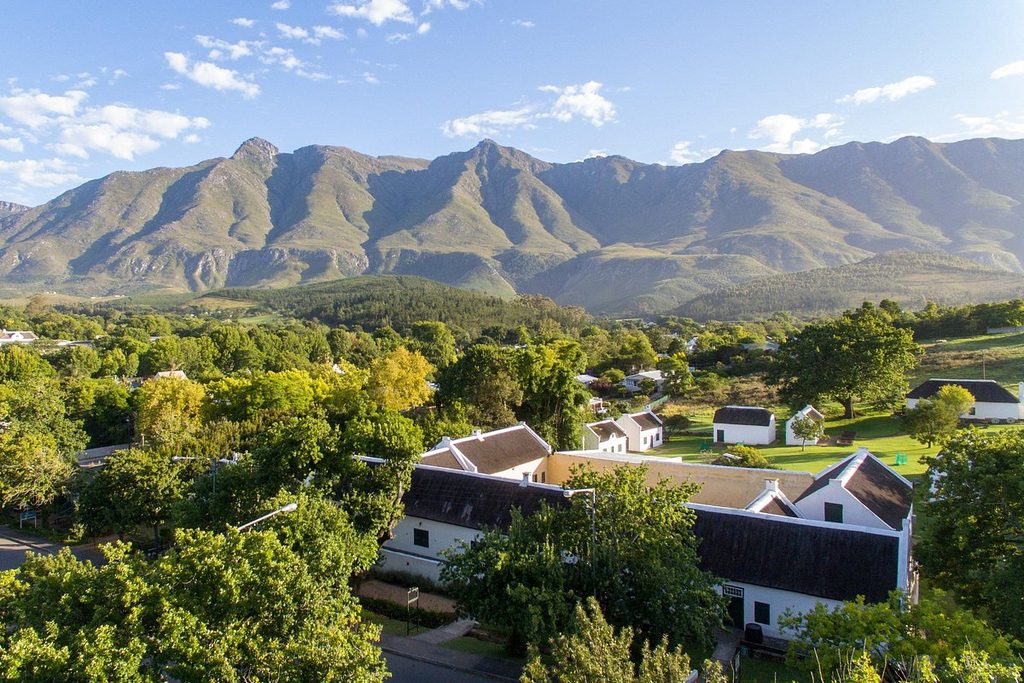
The Garden Route’s Dutch story begins, fittingly, at Swellendam, one of the oldest towns in South Africa, established by the VOC in 1745 as its easternmost administrative outpost — a sign of just how far Dutch authority had already reached by the mid-18th century. The Drostdy, the old magistrate’s residence and courthouse, remains one of the best-preserved examples of Cape Dutch civic architecture anywhere in the country, its symmetrical façade and thatched roof unchanged since Dutch officials once used it to govern a frontier stretching hundreds of kilometers inland.

Strolling through the Drostdy Museum complex today, with its restored watermill, orchard, and outbuildings, visitors get a rare, intact picture of daily colonial life at the edge of the known world — a life defined as much by isolation and hardship as by the refined gables found closer to Cape Town.
George: Named for a King, Built by Dutch Hands
Further along the route sits George, founded in 1811 but built on land settled generations earlier by Dutch-descended farmers drawn to the fertile foothills of the Outeniqua Mountains. The town’s old drostdy and several surviving Cape Dutch homesteads on its outskirts trace back to farming families who arrived from the western Cape in the 1700s, adapting their building style to the wetter, greener climate of the southern coast.

George is also the gateway to the Outeniqua Pass and the historic Montagu Pass, an engineering marvel completed in 1847 that finally linked the isolated timber town of Knysna to the Cape’s road network — though its roots lie in much earlier Dutch-era attempts to tame this famously impassable terrain.
Knysna and the Forest Frontier
No chapter of Garden Route history is more evocative than that of Knysna’s ancient forests. Dutch and later Afrikaner woodcutters moved into these dense, indigenous forests from the 1770s onward, harvesting yellowwood and stinkwood to build the furniture, wagons, and homes of the growing colony. Their descendants, known as the Knysna woodcutters, developed a distinct, semi-isolated culture deep in the forest, living alongside elephants, leopards, and some of the oldest trees in Africa.
Today, a walk beneath the Knysna Forest’s towering yellowwoods — some over 800 years old — offers a direct link to that era. The Millwood Goldfields and old forest trails nearby still bear the marks of the wagon roads these woodcutters carved by hand, while local museums preserve their tools, folklore, and the haunting legend of “Old Foot,” the last of the great forest elephants once hunted along these same paths.
Knysna’s lagoon-side Sinclair House and several surviving 19th-century timber homes reflect a simplified, practical adaptation of Cape Dutch style — proof that this architectural tradition traveled with the people, adjusting itself to whatever materials and climate they found.
Oudtshoorn and the Klein Karoo: Beyond the Forest
A detour north over the mountains leads to Oudtshoorn, on the edge of the semi-arid Klein Karoo. Settled by Dutch-descended trekboers — semi-nomadic pastoral farmers — from the mid-1700s, the region later became world-famous for ostrich farming, producing the so-called “feather palaces”: extravagant sandstone Victorian-Edwardian mansions built by ostrich feather barons in the late 1800s. While later than the classic Cape Dutch period, these grand homes were built by families whose roots and farming traditions traced directly back to the earliest Dutch trekboer settlers of the interior.
The rugged beauty of the Klein Karoo — flat-topped mountains, red earth, and wide open sky — reflects the harsher, more austere landscape that shaped this branch of Dutch-descended farming culture, distinct from the lush vineyards of the western Cape.
Wilderness and Wildlife: The Land the Dutch Called Home
Between George and Knysna lies the aptly named Wilderness, a stretch of coastline where forested hills tumble down to a chain of freshwater lakes and a wild Indian Ocean shoreline. Early Dutch travelers described this stretch of coast with a mixture of awe and dread — a beautiful but formidable landscape that took decades to settle and cross safely. Today, the Garden Route National Park, encompassing Wilderness, Knysna, and the Tsitsikamma section further east, protects the very forests and coastline that so challenged — and ultimately shaped — the farmers and foresters who settled here.
Traditions of the Frontier
The Dutch-descended communities of the Garden Route developed traditions distinct from their Cape Town cousins, shaped by forest, farm, and frontier life. Karoo lamb and slow-cooked potjiekos remain staples of the region’s farming tables, often prepared over open fires much as trekboer families once did. Storytelling and folk music thrived in isolated forest and farming communities, giving rise to a rich body of regional Afrikaans folklore — including ghost stories of the Knysna forest and tales of legendary elephant hunts that are still recounted by local guides today.
Country markets in towns like Sedgefield and Barrydale, selling homemade preserves, dried fruit, and biltong, echo the self-sufficient farming traditions of the original Dutch and Afrikaner settlers, adapted over centuries to this greener, wilder stretch of coast.
A Different Face of the Same Heritage
If the Cape Winelands show Dutch heritage at its most refined, the Garden Route shows it at its most resilient. Here, the story isn’t one of grand estates and formal gables, but of forest paths cut by hand, isolated farming communities, and towns built at the edge of the known world. The Drostdy of Swellendam, the ancient forests of Knysna, and the sandstone mansions of Oudtshoorn each tell a different chapter of the same long migration — one that carried Dutch language, architecture, and tradition across mountains, forests, and semi-desert plains to help shape the extraordinary cultural landscape of South Africa.
For travelers who have already explored Cape Town and the Winelands, the Garden Route offers something just as rich: a chance to see how that same heritage adapted, weathered, and endured along one of the most beautiful coastlines in the world.