



Europe’s Wake-Up Call

Mario Draghi’s Blueprint for a Continent That Refuses to Fall Behind
The world that once made Europe rich no longer exists. Mario Draghi thinks that’s not a eulogy — it’s an opening line.
eyesoneurope
Amsterdam, July 23, 2026 – There’s a particular kind of warning that only lands when it comes from someone who has spent a career being cautious. Mario Draghi — the economist who once talked the euro back from the brink as head of the European Central Bank, and who later served as Italy’s prime minister — is not a man given to dramatics. Which is exactly why his 2024 report on European competitiveness, and the speeches he’s continued to give since, have rattled European capitals in a way that more excitable warnings never did.

His message, distilled: Europe built its prosperity on three cheap inputs — Russian energy, Chinese demand for its exports, and American security guarantees. All three are gone or going. And unless Europe fundamentally rewires how it invests, innovates, and governs itself, it risks becoming what Draghi has bluntly called strategically irrelevant — a wealthy museum on the edge of a world being shaped by others.
That’s the crisis. What makes Draghi’s message inspiring rather than merely alarming is the second half of it: he believes Europe still has everything it needs to compete — if it’s willing to act like a single power instead of 27 quarreling ones.
The Diagnosis: A Continent Investing in Its Own Decline
Draghi’s original report put a number on the problem that startled even seasoned Brussels policy hands: Europe needs roughly €800 billion a year in additional investment just to close its innovation and productivity gap with the United States and China. Not spending — investment, in energy grids, semiconductors, AI infrastructure, and the kind of deep research that produces the next generation of companies rather than just protecting the last one.
The uncomfortable truth underneath that figure is that Europe doesn’t lack savings. It lacks the mechanisms to turn its own capital into its own growth. European household savings routinely flow across the Atlantic to fund American innovation, because Europe’s capital markets remain fragmented along national lines — 27 separate rulebooks standing in for what should be one deep, unified market. Draghi’s answer is not a slogan; it’s plumbing. A genuine savings and investment union. A unified capital market. Joint European funding for the technologies — clean energy, advanced computing, biotech — that no single member state can finance alone.
The Reckoning: Trump’s America Changes the Bet
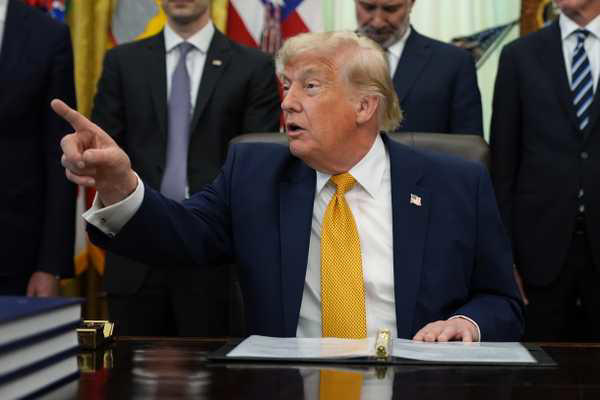
For years, Europe could treat American power as a fixed cost of doing business — Washington paid for the security, and Europe paid attention to its own internal squabbles. Draghi has spent much of 2026 arguing that bet no longer pays off. Speaking in Leuven in February and again in Aachen in May — where he received the Charlemagne Prize for his services to European integration — Draghi described a Washington now treating tariffs, technology, and even territorial disputes as tools of leverage rather than alliance management, and warned that Europe’s reliance on the US for defense could easily bleed into trade, energy, and technology dependence as well.
His conclusion is uncomfortable for a continent that has always preferred consensus to decisiveness: power, he argues, follows unity. Wherever Europe has genuinely acted as one bloc — trade policy, competition enforcement, monetary policy — it negotiates as an equal and gets taken seriously; new trade agreements with South American and Indian partners are proof the model works. Wherever it hasn’t — defense, foreign policy, industrial strategy — it gets treated, in his words, as a loose assembly of middle-sized states to be divided and dealt with individually. His prescription is what he calls “pragmatic federalism”: rather than waiting for all 27 states to agree on everything, let the countries willing to move faster do so together, building common projects that the rest can join later.
The Real Competition Isn’t Just Washington
It’s tempting to frame Europe’s challenge purely as a transatlantic story — the old world catching up to Trump’s America. But the more interesting competitive pressure is coming from the other direction: the fast-growing markets of Southeast Asia, where countries like Vietnam, Indonesia, and the Philippines are absorbing manufacturing investment that once might have gone to Europe, building young, digitally fluent workforces, and striking their own trade and supply-chain deals with both Washington and Beijing. Europe isn’t just being squeezed between two superpowers — it’s competing with an entire region that is younger, hungrier, and less encumbered by legacy regulation.
That’s precisely why Draghi’s emphasis on speed matters as much as his emphasis on scale. A currency union and a single market were extraordinary achievements decades in the making. But Southeast Asian economies are moving at a pace regulatory harmonization in Brussels was never built for. Draghi’s answer isn’t to abandon Europe’s institutions — it’s to make them move faster: cut the regulatory “gold-plating” that member states pile on top of EU rules, fast-track approvals for strategic industries, and stop treating deep integration as an eventual goal rather than an urgent one.
Why This Is a Hopeful Story, Not Just a Grim One
It would be easy to read all this as decline narrated eloquently. Draghi doesn’t see it that way, and the case for optimism is real. Europe still has the world’s largest single consumer market, a currency used and trusted globally, a highly educated workforce, and — as the Greenland standoff with the Trump administration demonstrated, where a united European position helped push Washington to back down — real leverage when it chooses to use it collectively rather than dilute it through 27 separate voices.
The core of Draghi’s vision is ultimately a vote of confidence: Europe’s problem was never a lack of resources or talent. It was a lack of unity translating those resources into action. Closing that gap — through joint investment, a genuine single market for capital, and a willingness to let ambitious member states move first — is, in his telling, entirely within Europe’s own hands. That’s a rare thing in geopolitics: a crisis whose solution doesn’t depend on what anyone else decides to do.
A Note on the Debate
Not everyone shares Draghi’s diagnosis or his prescription. Critics on the political right in several member states see “pragmatic federalism” as a euphemism for ceding national sovereignty over fiscal and industrial policy to Brussels and a handful of larger states. Trade unions and environmental groups have warned that the deregulatory push accompanying the Competitiveness Compass — the European Commission’s policy response to Draghi’s report — risks becoming a rollback of labor and environmental protections dressed up as competitiveness reform. And some economists have questioned whether an €800-billion-a-year investment figure is achievable, or even the right target, given the political difficulty of agreeing joint EU borrowing on that scale. Draghi’s vision is compelling, but it remains a contested one — and how much of it Europe actually adopts will be decided in the ordinary, unglamorous business of national parliaments and Brussels negotiations, not in a single speech.