The Careers Powering South Africa’s Next Generation
eyesonsouthafrica
Amsterdam, September 18, 2026 – Tourism may be one of South Africa’s most visible growth stories, but it’s far from the only one. Across mining towns turned tech hubs, renewable energy farms, hospital wards, courtrooms, and start-up incubators, a quieter transformation is underway — one built by young South Africans choosing careers that didn’t exist, or weren’t nearly as promising, a generation ago. For students weighing their futures today, the country offers a surprisingly wide runway of opportunity, often overlooked in conversations that focus only on unemployment statistics.
Renewable Energy: Powering a New Economy
Few sectors illustrate South Africa’s pivot toward the future as clearly as renewable energy. Years of electricity shortages exposed just how fragile the country’s power grid had become — and in response, an entire industry has sprung up around solar, wind, and battery storage. Engineers, technicians, project managers, and policy specialists are in high demand as private companies and municipalities race to build independent power capacity. For engineering and science students in particular, this sector offers not just job security, but the chance to work on infrastructure that will define the country’s next fifty years.
Technology and Fintech: Africa’s Digital Frontier
Cape Town and Johannesburg have quietly become two of Africa’s most active tech hubs, home to a growing cluster of fintech start-ups, software developers, and digital payment platforms serving markets across the continent. South African-born companies have already built products used by millions of people who have never had access to traditional banking, and the demand for software engineers, UX designers, data analysts, and cybersecurity specialists keeps climbing. Because tech talent can work remotely for international clients while still living locally, this sector also offers young South Africans a rare option: earning globally competitive income without leaving home.
Healthcare: A Calling With Constant Demand
South Africa’s healthcare system, both public and private, faces persistent shortages of doctors, nurses, pharmacists, and allied health professionals — a challenge that, for students entering the field, translates into strong and stable career prospects. Beyond traditional clinical roles, there is growing demand in public health research, health-tech, and telemedicine, fields that let young professionals combine medical training with the country’s expanding digital infrastructure. For those willing to serve in under-resourced rural areas, government incentive programs often ease the path through training and into stable employment.
Mining and Green Minerals: An Old Industry, Reinvented
Mining has always been central to South Africa’s economy, but the story is shifting. The global transition to electric vehicles and renewable technology has created surging demand for the very minerals South Africa is rich in — platinum, manganese, and rare earth elements among them. This has opened new career paths in mining engineering, metallurgy, environmental compliance, and sustainable resource management, as companies modernize operations and face growing pressure to mine responsibly. For engineering and geology students, it’s an industry being rebuilt around sustainability rather than despite it.
Agriculture and Agritech: Feeding a Continent
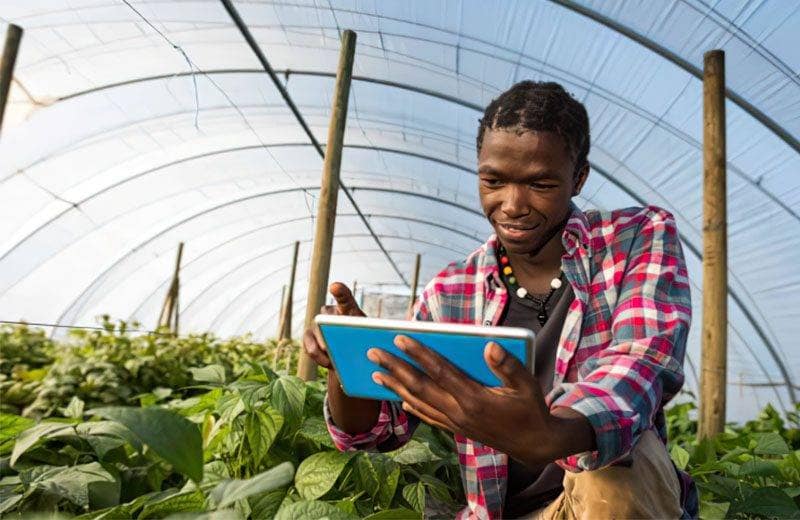
South Africa remains one of the few consistently food-secure nations in Africa, and its agricultural sector is increasingly turning to technology to stay that way. Precision farming, drought-resistant crop science, supply chain logistics, and agritech start-ups are creating roles for young agronomists, data scientists, and entrepreneurs who understand both the land and the software that now helps manage it. With African food demand projected to grow substantially in the coming decades, South African agricultural expertise is positioned to matter well beyond its own borders.
Law, Governance, and Public Policy: Shaping a Young Democracy
South Africa’s democracy is still, relatively speaking, young — and that means its legal and governance institutions remain very much a work in progress. This creates unusually meaningful opportunities for law graduates, policy analysts, and public administrators to shape how the country’s constitution, courts, and institutions function in practice. Unlike more settled democracies where such systems are largely fixed, South African legal and policy careers still carry the weight — and appeal — of nation-building.
A Final Thought: Why Staying Might Be the Braver, Smarter Choice
For many young South Africans, the idea of emigrating to the United States, the Netherlands, or another wealthy nation carries obvious appeal: higher wages, stable infrastructure, and a sense of security that can feel hard to find at home. But that comparison, while understandable, often misses something important — the difference between a mature economy and a maturing one.
In established First World countries, young professionals typically enter systems that are already built. The infrastructure exists, the institutions are settled, the career ladders are well-defined — and so is the competition. Advancement often means climbing a tall, crowded structure that someone else designed decades ago. In South Africa, by contrast, many of these structures are still being built, which means the people entering these fields today aren’t just filling jobs — they’re shaping what those jobs, industries, and institutions will become. A young engineer helping design the renewable grid, a young doctor building rural telemedicine networks, or a young lawyer testing the boundaries of constitutional protections isn’t joining history — they’re writing it.
There is also a quieter, more personal case for staying: proximity to family, culture, language, and a sense of belonging that’s difficult to quantify but easy to feel the absence of once it’s gone. Many who emigrate in pursuit of higher salaries find that the cost isn’t just measured in flights home or time zones — it’s measured in birthdays missed, traditions diluted, and a growing distance from the community that shaped them.
None of this means emigration is the wrong choice for everyone — for some, it will remain the right one. But for the young South African weighing a promising local career against the pull of a “richer” country abroad, it’s worth asking a different question than “where can I earn more?” It might instead be: “where can I build something that matters, and still come home to people who know my name?” For a growing number of young professionals, the answer is increasingly right where they already are.