


Echoes of the Netherlands at the Foot of Africa

A Journey Through South Africa’s Dutch Heritage
eyesonsouthafrica
There is a corner of the world where windmill-straight gables rise against a backdrop of jagged mountains, where the language on street signs curls with the soft consonants of old Dutch, and where vineyards planted more than three centuries ago still ripen in the African sun. This is South Africa’s Cape — a place shaped as much by Amsterdam and Delft as by the ancient soil of Africa itself. To travel here is to walk through layers of history: indigenous Khoikhoi trails, Dutch East India Company outposts, French Huguenot refuge, and the deep, complicated legacy of the people who built a new culture — Afrikaner and Cape Malay — at the tip of the continent.
This is an invitation to explore that heritage: not to erase the difficult chapters of colonization, but to understand how they shaped some of the most strikingly beautiful and culturally rich destinations on Earth.
Cape Town: Where It All Began
Every journey into South Africa’s Dutch story starts in Cape Town, founded in 1652 as a refreshment station for the Dutch East India Company (VOC). Ships sailing the spice route between Europe and Asia stopped here to restock on water, vegetables, and meat — and from that modest garden, an entire nation grew.
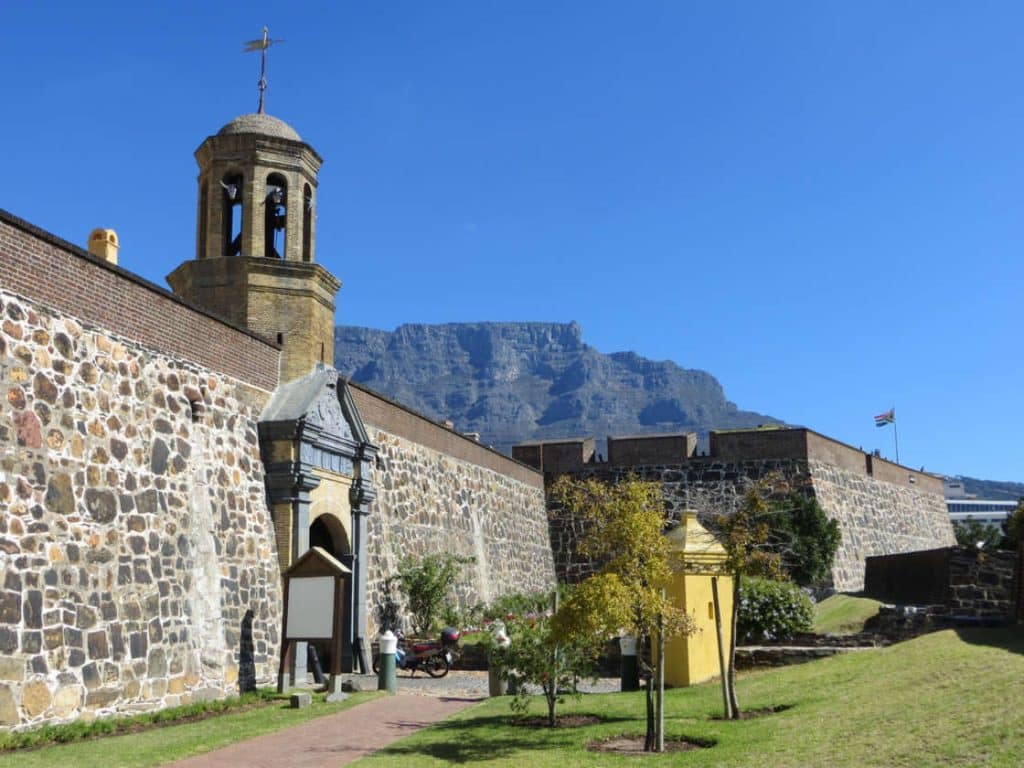
At the heart of the city stands the Castle of Good Hope, the oldest surviving colonial building in South Africa. Completed in 1679, its five-pointed bastioned walls still trace the star shape favored by Dutch military engineers of the era. Walking its stone corridors, past the old bell tower and the Dolphin Pool, visitors can almost hear the clatter of VOC officials going about the business of empire.
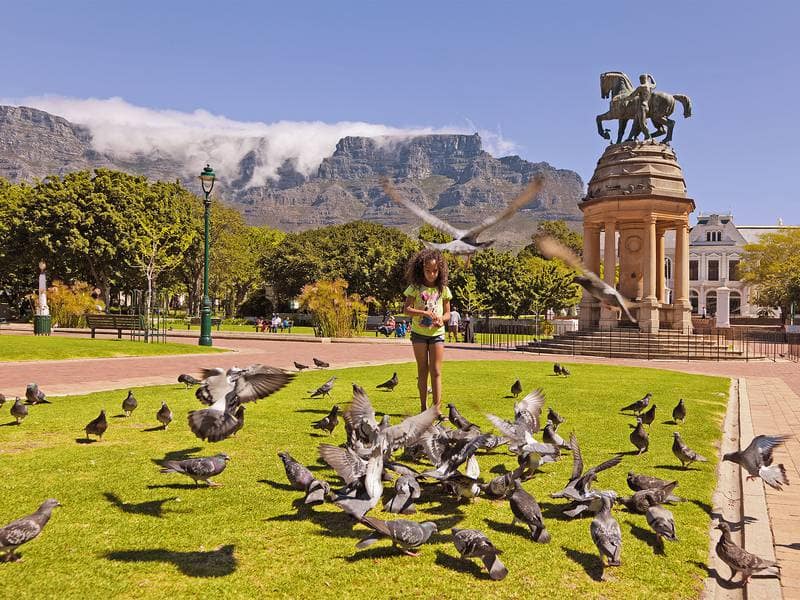
Just a short stroll away lies the Company’s Garden, once the literal vegetable patch that fed passing Dutch ships and now a lush, oak-lined park in the middle of the city — a green memory of the settlement’s earliest days.
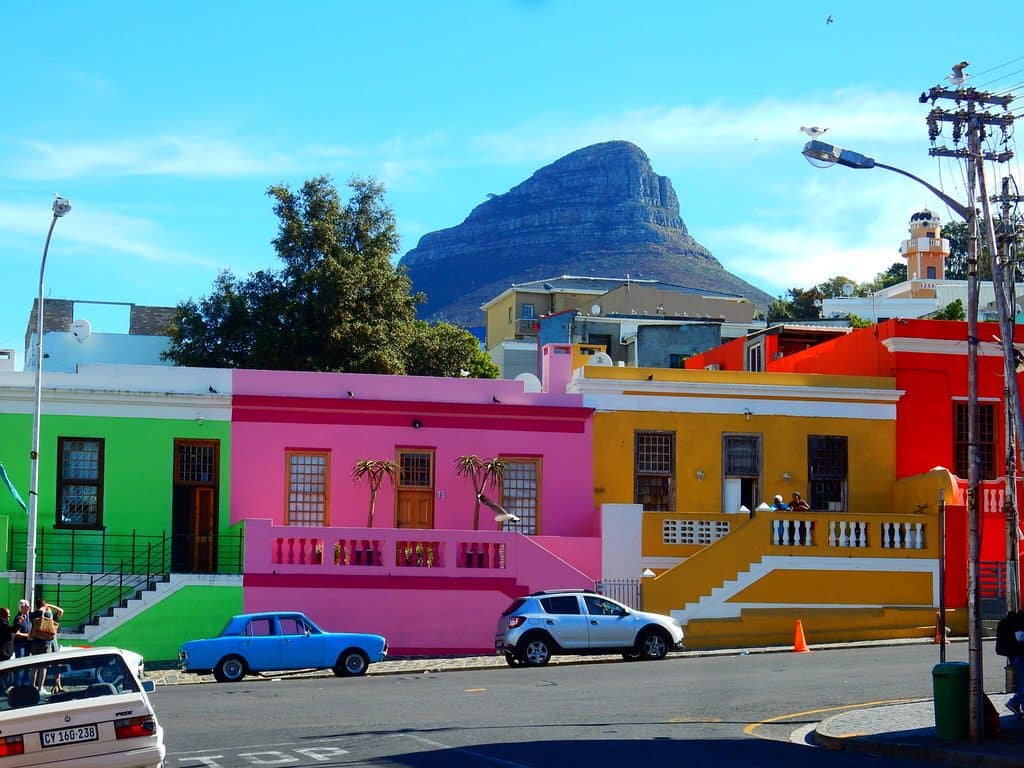
No visit to Cape Town is complete without wandering the cobbled lanes of the Bo-Kaap, the historic quarter where descendants of enslaved and free Muslim people — many originally brought to the Cape by the Dutch from Southeast Asia — built a vibrant, brightly painted neighborhood. The candy-colored houses, the call to prayer drifting from minarets, and the fragrant spice of Cape Malay cooking tell a story of resilience woven inseparably into the Cape’s Dutch-era history.
Stellenbosch: The Heart of Cape Dutch Elegance
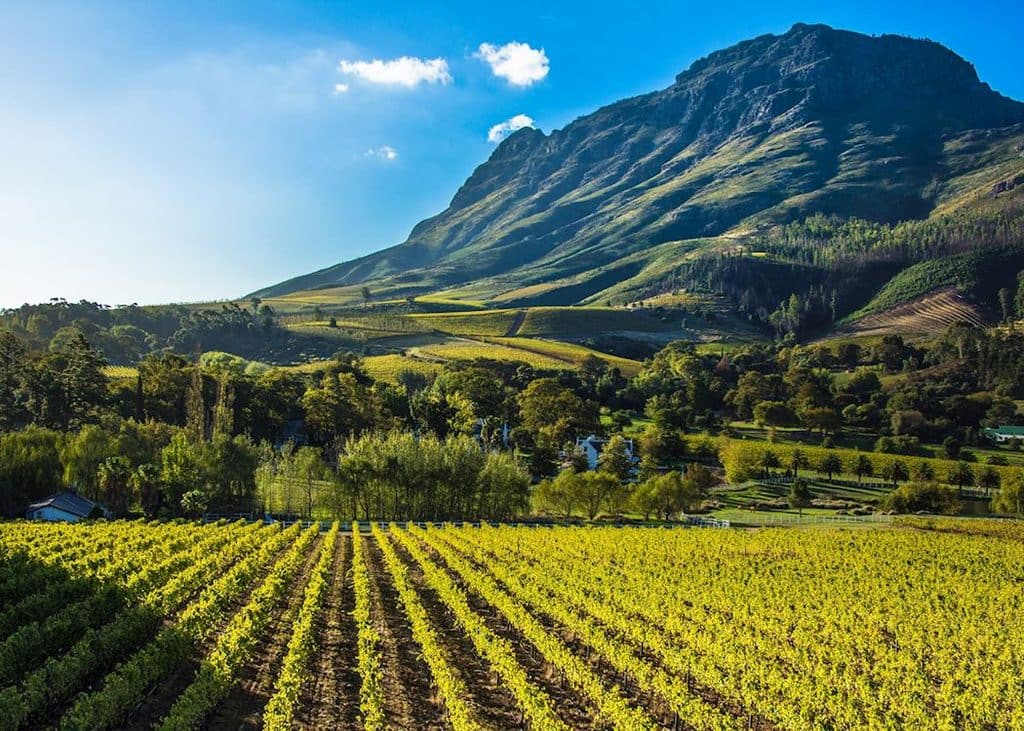
An hour’s drive from Cape Town, Stellenbosch feels like a page lifted from a 17th-century Dutch pattern book. Founded in 1679 and named after Dutch governor Simon van der Stel, it is the second-oldest town in South Africa and arguably the finest showcase of Cape Dutch architecture anywhere in the world.
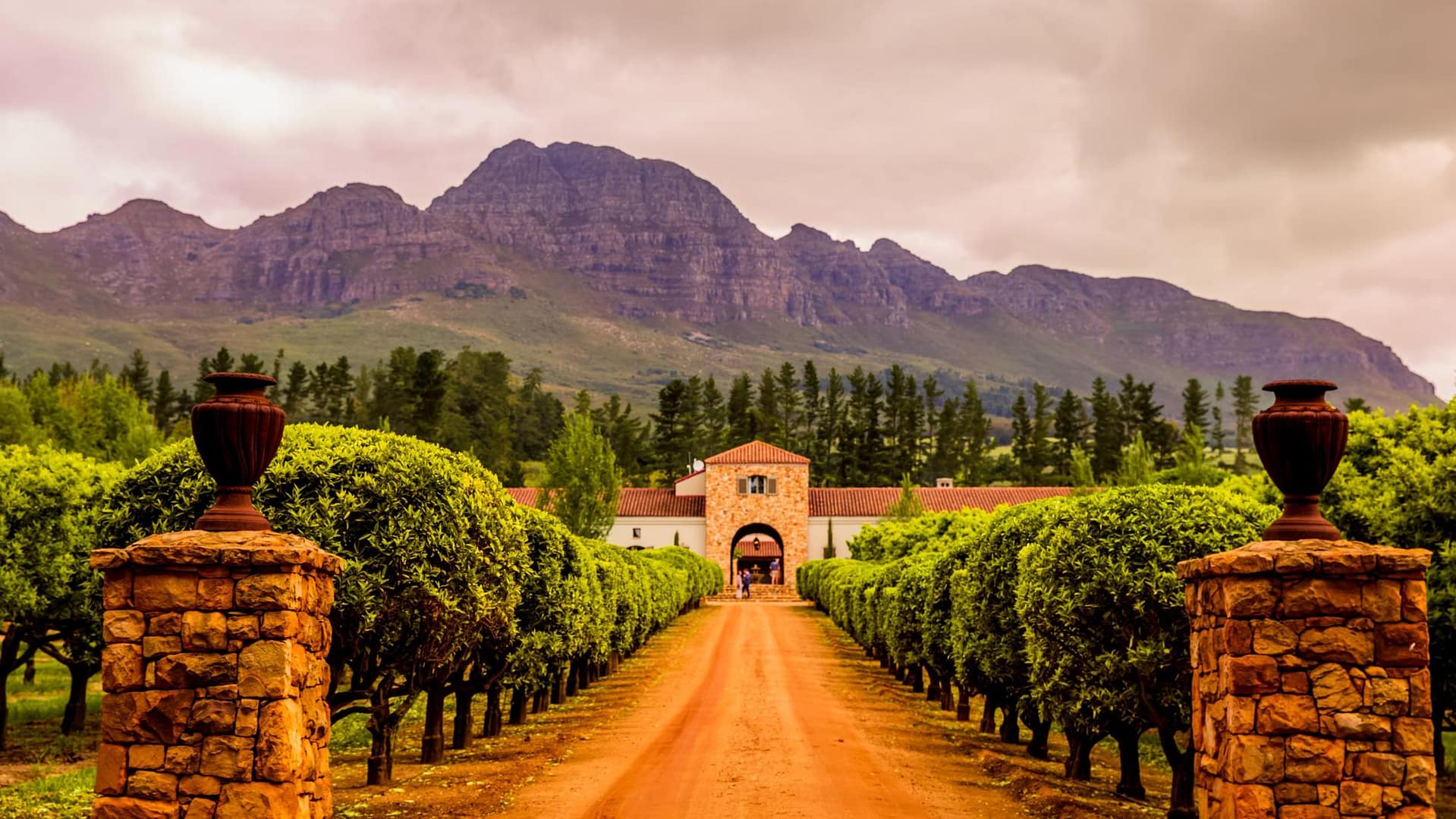
Wander down Dorp Street, one of the best-preserved historic streets in the country, and you’ll find whitewashed, thatch-roofed homes with their signature curved, ornamented gables — a style that fused Dutch, German, and French design sensibilities into something entirely new and entirely African. These gables, shaped like scrolls, bells, or holly leaves, weren’t just decorative; they were a proud architectural signature unique to this part of the world.
Stellenbosch is also the soul of South African wine country. The Dutch settlers, followed soon after by French Huguenot refugees fleeing religious persecution in the late 1680s, planted the vineyards that would become world-renowned estates. Wine farms like Boschendal, with its gleaming white Cape Dutch manor house, and the venerable Groot Constantia — Africa’s oldest wine estate, founded by Simon van der Stel himself in 1685 — remain working farms where visitors can taste history in a glass.
Franschhoek: The Valley of the Huguenots
Just beyond Stellenbosch lies Franschhoek — literally “French Corner” — a valley of extraordinary beauty settled by French Protestant refugees who arrived under Dutch protection and quickly assimilated into Cape Dutch society. Within a generation, most had adopted the Dutch language and customs of their neighbors, yet they left behind vineyards, surnames, and a distinctly Old World elegance that still defines the valley today.
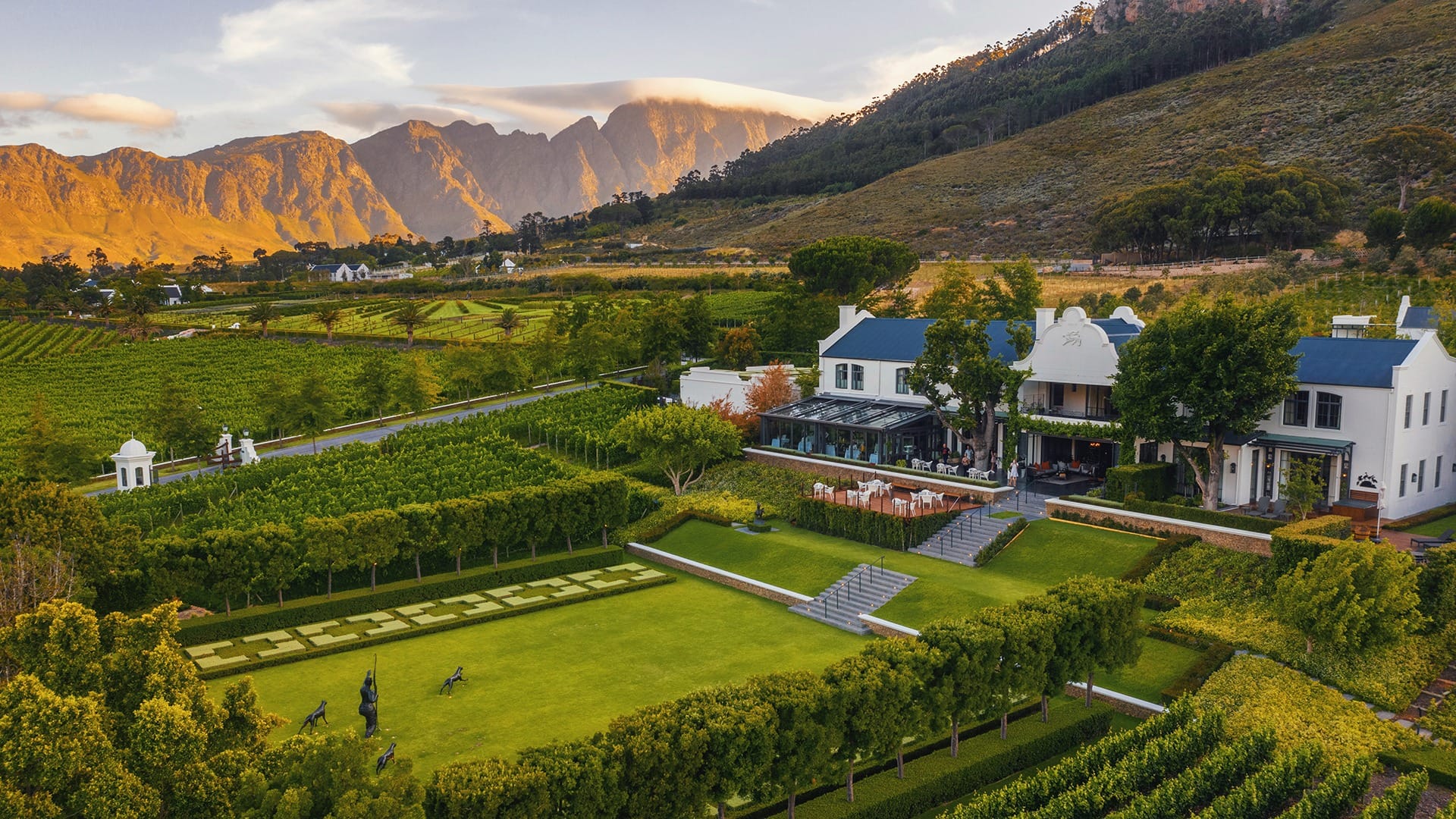
The Huguenot Memorial Museum, with its soaring monument of three arches symbolizing the Holy Trinity, honors this migration. Surrounding it, mountains fold dramatically around a valley floor checkered with vines — one of the most photographed landscapes in the country, and for good reason. Few places on Earth combine mountain drama, architectural grace, and world-class food and wine so effortlessly.
Tulbagh and Genadendal: Time Capsules of the Cape
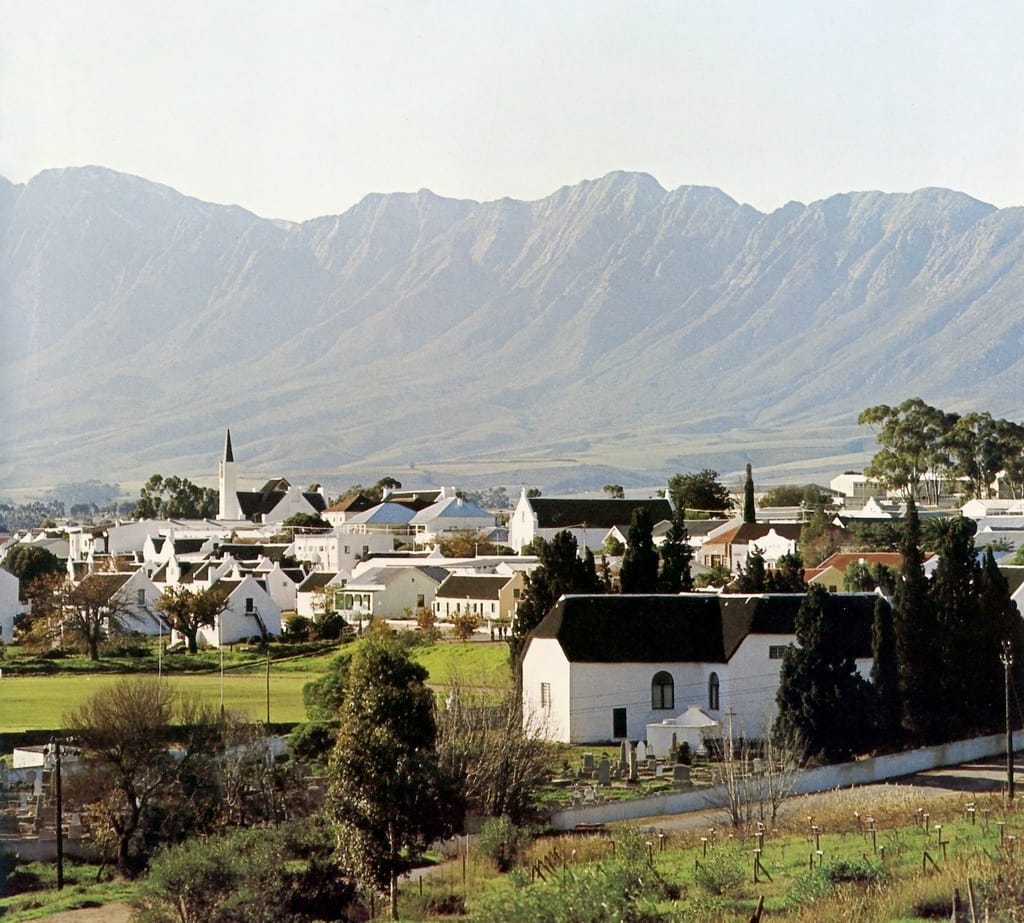
For travelers seeking an even purer glimpse into Cape Dutch life, the towns of Tulbagh and Genadendal offer remarkable time capsules. Tulbagh’s Church Street contains one of the highest concentrations of protected historic buildings in South Africa — a row of 18th- and 19th-century Cape Dutch, Cape Georgian, and Victorian homes rebuilt with painstaking care after a devastating 1969 earthquake.
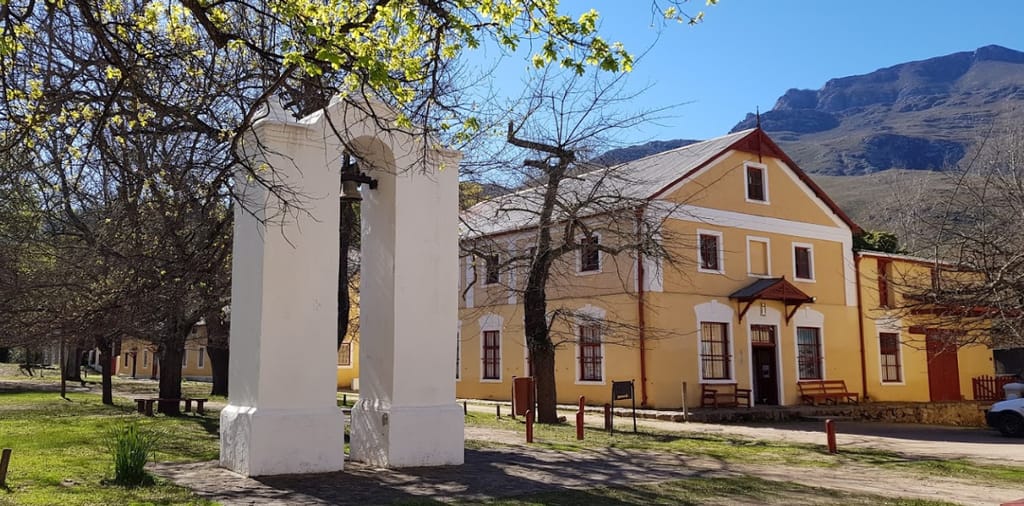
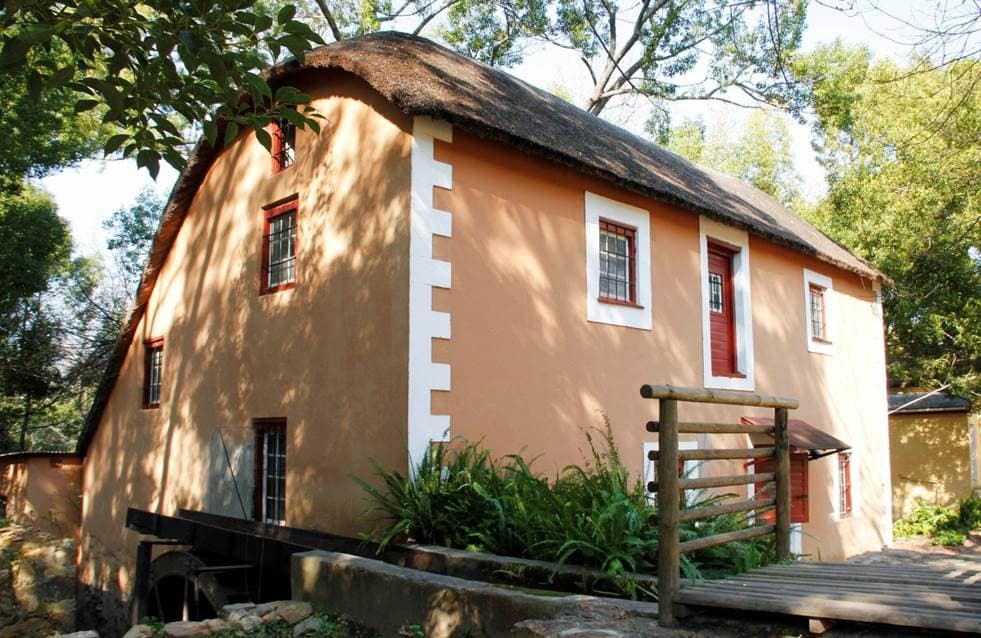
Genadendal, meanwhile, holds a quieter but no less important distinction: founded in 1738, it is the oldest mission station in South Africa, established by the Moravian Church with strong Dutch-era roots. Its mission houses, watermill, and old bell — still rung today — speak to a history of faith, education, and community that predates much of the rest of the country’s colonial development.
The Great Trek and the Afrikaner Heartland
Dutch heritage in South Africa is not confined to the Cape. In the 1830s, groups of Dutch-descended farmers — the Voortrekkers — loaded their ox wagons and moved inland in what became known as the Great Trek, seeking independence from British rule at the Cape. Their journey shaped the interior of the country and gave rise to Afrikaner culture as a distinct identity.
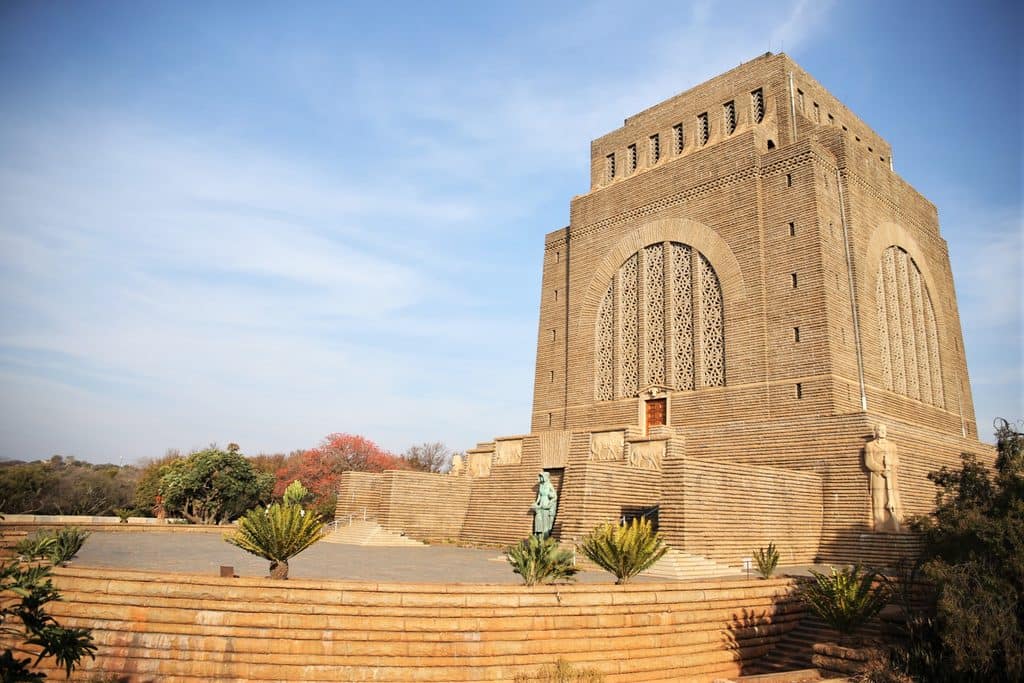
In Pretoria, the imposing Voortrekker Monument rises from the highveld like a granite fortress, its walls lined with marble friezes depicting the trek in extraordinary detail. Whatever one’s view of the politics surrounding it, it remains one of the most architecturally striking monuments in Africa and an essential stop for understanding how Dutch heritage evolved, changed, and took root far from the sea.
Traditions That Live On
Dutch heritage in South Africa isn’t locked away in museums — it’s alive in daily life. Afrikaans, a language born from 17th-century Dutch and shaped by Khoikhoi, Malay, and African influences, is spoken by millions today and carries an unmistakable, melodic kinship to its parent tongue.
Food tells its own story: koeksisters, syrup-soaked plaited pastries, trace back to Cape Malay and Dutch culinary traditions; potjiekos, a slow-cooked stew made in a three-legged cast-iron pot, echoes the communal cooking of trekking families; and biltong, dried and spiced meat, was born of necessity on long journeys and is now a beloved snack nationwide.

Traditional Boeremusiek — folk music built around concertina and guitar — still draws dancers at country festivals, while the rhythmic, joyful Cape Malay choirs fill Cape Town’s streets every New Year during the Kaapse Klopse carnival, a tradition with roots stretching back to the era of Dutch rule.
Landscapes That Inspire
What makes this heritage trail so unforgettable is the land itself. The jagged peaks of the Cape Fold Mountains cradle valleys of vineyards in every direction. The Cape Winelands, with their patchwork of green vines against granite cliffs, rank among the most beautiful agricultural landscapes anywhere in the world. Further along the coast, whitewashed gabled farmhouses sit beside wheat fields that ripple gold in the wind, a scene as reminiscent of the Cape’s Dutch farming roots as anything found in Europe.
A Living Heritage
To travel through South Africa’s Dutch heritage sites is to encounter a story far richer and more complex than any single nation’s history — one shaped by Dutch settlers, French Huguenots, enslaved Southeast Asians, indigenous Khoikhoi communities, and later Afrikaner trekkers, all woven together over more than 350 years. The gabled homes of Stellenbosch, the star-shaped bastions of the Castle of Good Hope, the painted houses of the Bo-Kaap, and the vineyard-draped valleys of Franschhoek all stand as living witnesses to this extraordinary convergence of cultures.
For travelers willing to look past the postcard views — though those views are, without question, spectacular — South Africa’s Dutch heritage offers something rare: architecture, food, language, and landscape that together tell the story of how a small trading post at the edge of a continent grew into one of the most culturally layered places on Earth.